

At 20 I had a psychology degree. At 21, a master's in organisational psychology. I had spent four years learning what humans need to flourish: autonomy, agency, psychological safety and a workplace that is safe for body and mind.
Then I walked into my first corporate job and looked around. This was so not it.
I could see the organisational problem clearly. What I could not see was myself. I said yes to everything, stayed available and rescued anybody who had a problem. I burnt out more than once and remained convinced that I was the problem.
You would not believe how many time-management courses I attended. My work was completed to a high standard, but the process looked messy and stressful. So I tried harder. Obviously.
Responsibility without power
In my last corporate job, they gave me the title but none of the authority that should have come with it. I was expected to move everything through collaboration and persuasion in a culture where every idea met the same answer: we have done it this way before.
I did something I would rather have chewed my own arm off than do. I asked my boss for help. She said she would relieve my workload by sacking me. Her parting words were, “I thought you'd be more of a bitch.”
I went to interviews, but my heart was not in them. I had always wanted to work for myself and thought I lacked the required gravitas. Eventually I thought, bugger this for a bunch of bananas, and started my own psychology practice.
Changing my job did not change my head. I still thought I was a bit rubbish.
Three words that explained the pattern
Four years later, I won a place on a women's award programme and met a woman at the House of Lords who had recently been diagnosed with ADHD. Everything she described, apart from the sporty part, was me. I was assessed for ADHD and later autism.
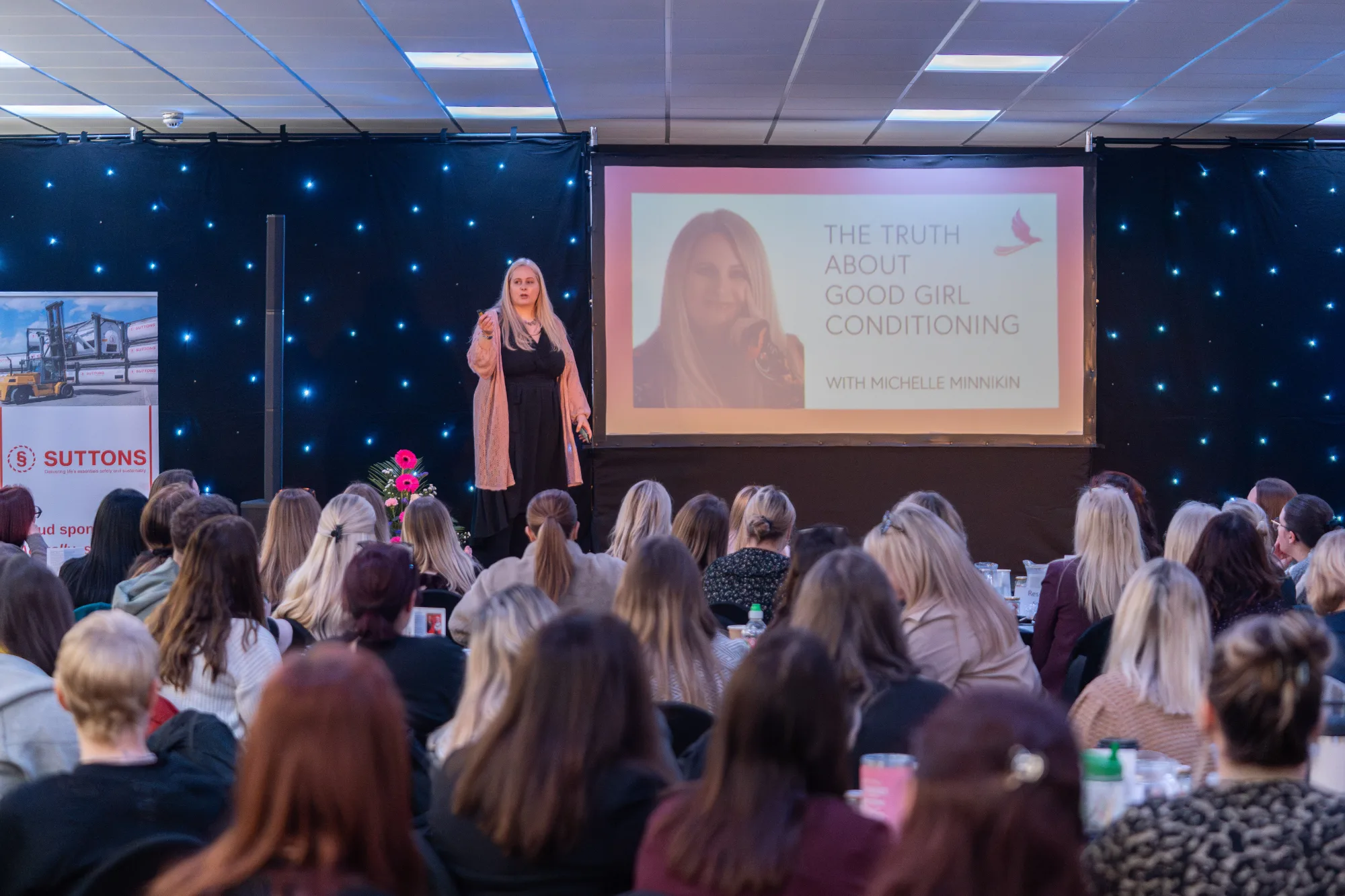
I expected relief. What I got was rage. That frightened me because women are not supposed to be angry.
Therapy and coaching helped me understand how my brain worked, but there was still a black hole: people-pleasing, conflict avoidance, deference to authority, perfectionism and procrastination.
Then somebody said three words to me: good girl conditioning.
I began investigating how women are trained from birth to be nice, care for others and put themselves last. That work led me to Albert Biderman's Chart of Coercion. I printed it, took out my coloured pens and asked whether its tools applied to the way women and girls are taught to behave.
I had spent the first 40 years of my life beating myself up while operating exactly as I had been trained. I could not keep that to myself, so I wrote a book.
Knowing does not make you immune
Recently, I was at a networking event and needed to leave early. I sat politely waiting for the speaker to finish until her partner noticed me squirming and said, “Liza would have left by now.” He was right. Two degrees, a framework and a book, and I still needed somebody else to give me permission to leave.
These days I use myself as the guinea pig. The Pleaser, Perfectionist and Rescuer are not bad people. They are intelligent adaptations to settings where we do not feel free to say no or live on our own terms. I can still use those roles. The difference is that I do it strategically, not habitually.
You may be part of the problem, and that is fine. You are not all of the problem. You are going to be judged anyway, so you may as well be judged for doing what you want rather than what you think you should.